
1880
Julia Lilienfeld was born on November 23 as the only child of Bernhard Lilienfeld (1844–1925) and Jeannette (Jenny) Lilienfeld (née Zuntz, 1852–1909). Her father runs the Berlin branch of the coffee company A. Zuntz sel. Wwe.
1896
Starts taking drawing classes at the “Damenatelier” (Women Studio) of Adolf Meyer in Berlin.
1900
Takes drawing and semi-nude classes at the drawing school of the Verein der Berliner Künstlerinnen und Kunstfreundinnen (Association of Female Artists and Art Lovers in Berlin) with the artist Martin Brandenburg until July 1901.
1901
She works on her own on portraits, rug designs, and other works.
1903
On March 20 she marries the physician Walter Salomon Berg (1871–1945).
1905
Meets Lyonel Feininger (1871–1956) in Berlin and together with others they vacation in Graal on the Baltic Sea. During the trip Julia and Lyonel fall in love and after their return separate from their respective spouses.
In October she moves to Weomar and starts taking a life nature drawing class with Berthold Paul Förster and begins a lithography and etching class with Otto Rasch at the Grossherzogliche-Sächsische Kunstschule (Grand Ducal Saxon Art School). She inspires Lyonel Feininger to start working in these techniques.
1906
In February Lyonel Feininger visits her for the first time in Weimar and he moves there the following month. In July they move to Paris where they rent an apartment at 242 Boulevard Raspail and attend drawing classes at the Académie Colarossi.
Their first son, Andreas Bernhard Lyonel (1906-1999), is born on December 27 in Paris.
1907
The take a summer vaction in Günterstal and at the Schluchsee in the Black Forest and she suffers a life-threatening hemorrhage.
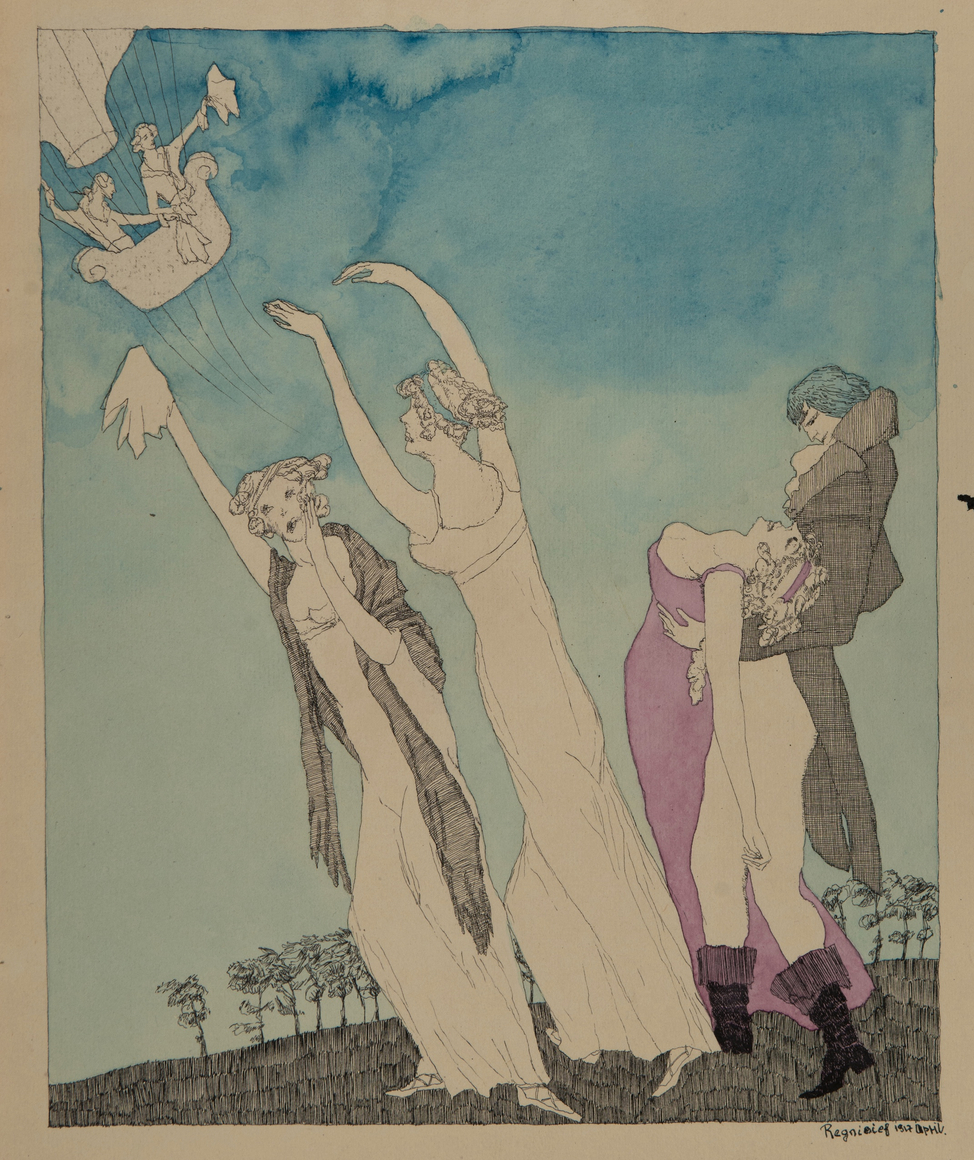
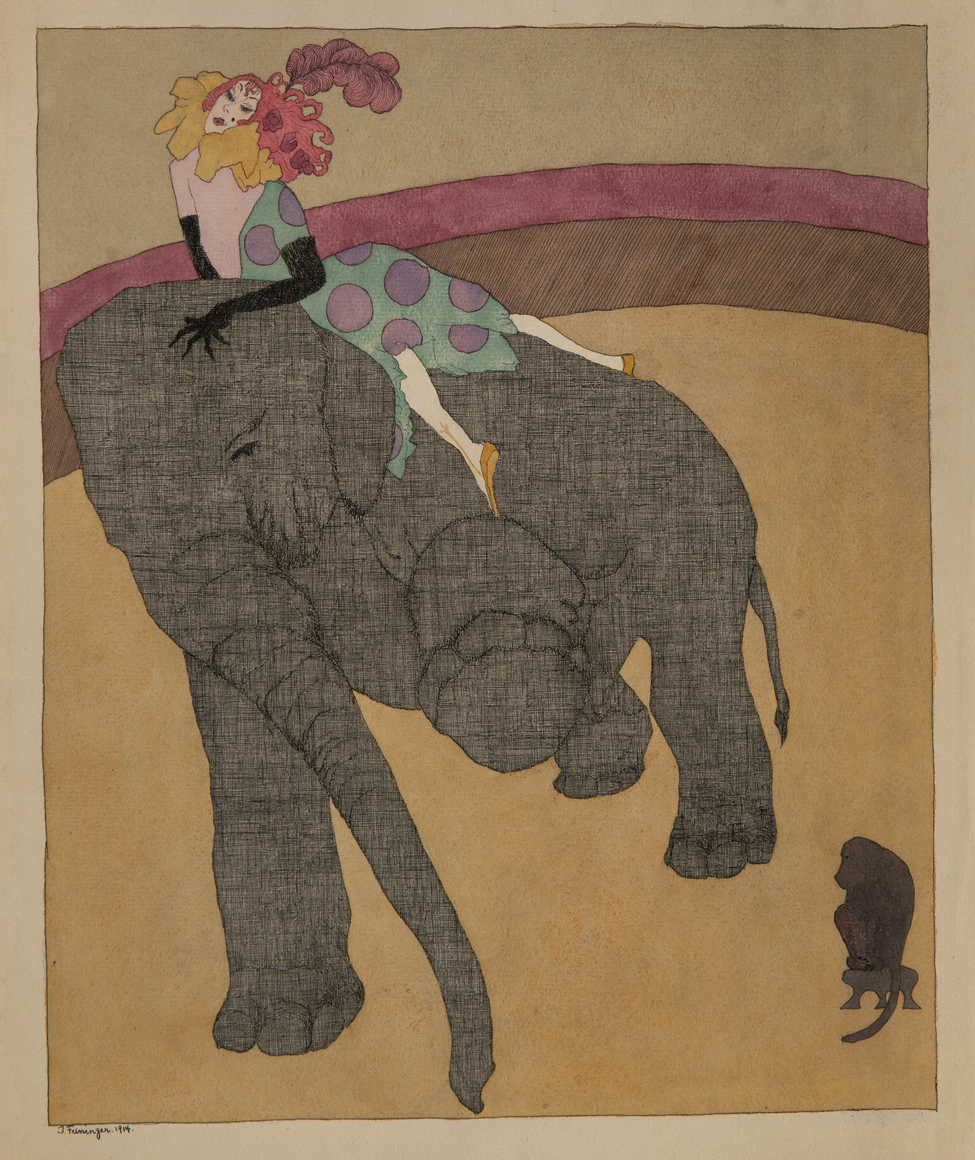
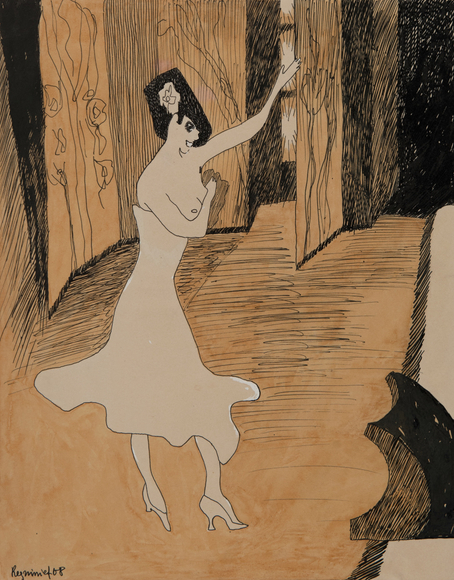
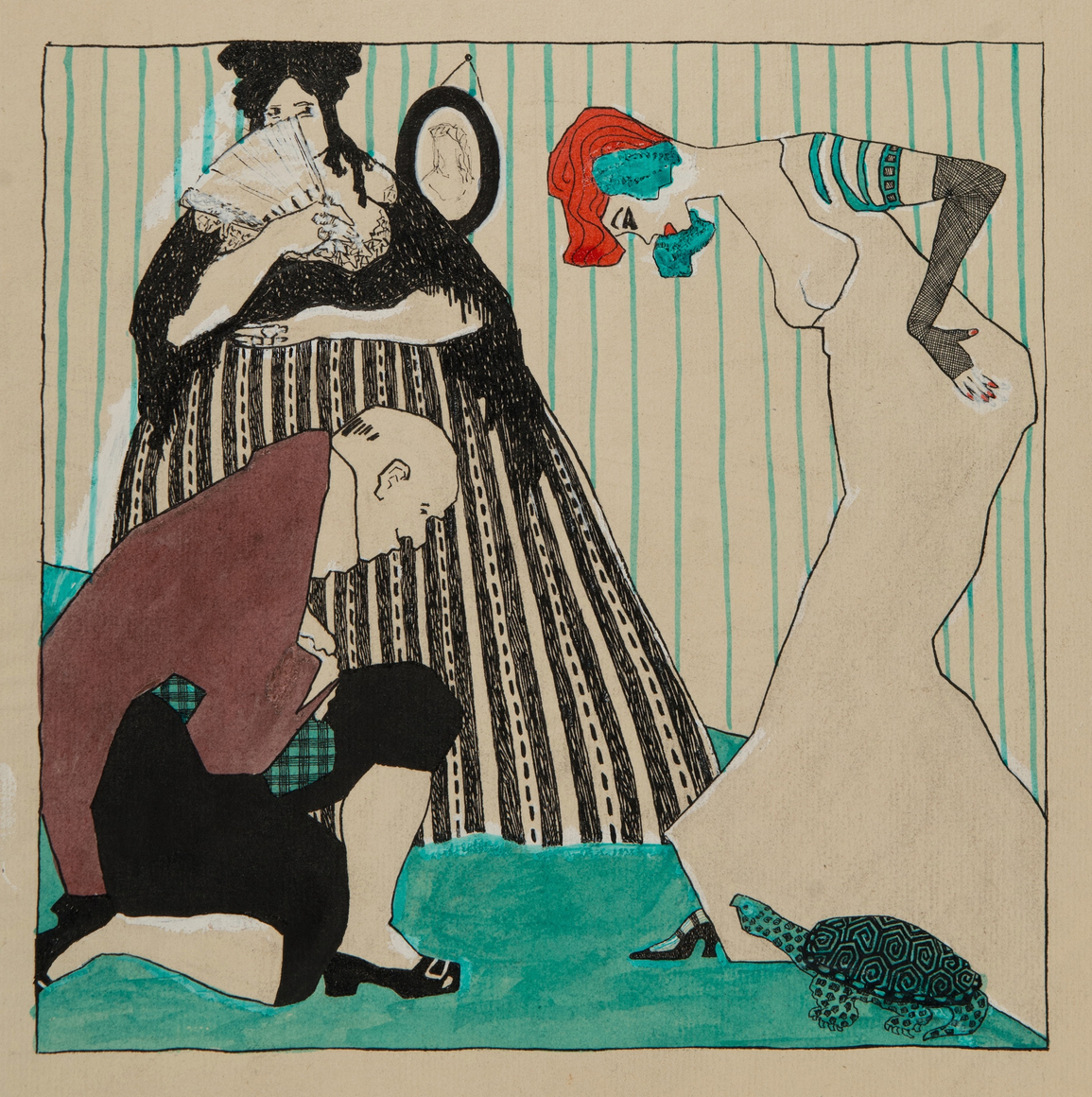
On December 7 her first drawing with the title “Pénible necessité” (Painful Necessity) is published in the French magazine Le Témoin (II, no. 47, p. 11) which was founded by Paul Iribe (1883–1935). Her drawings appear under the nome de plume “Regninief,” the palindrom of “Feininger.” Until 1908 six more of her drawings will be published in the magazine.
1908
In April Julia and Lyonel plan to marry in London. Upon learning that the law requires a three-week stay for those intending to wed, they decide to leave and to return in September.
On June 13 her last drawing with the title “Un début” (A Beginning) is published in Le Témoin (III, no. 24, p. 11). A drawing with the title “Verflucht!” (Cursed!) is published in the German magazine “Das Schnauferl,“ Blätter für Sporthumor (VII, no. 37, 1908, p. 21).
On September 25 they get married in London. In early October, they return to Paris before moving a few weeks later to Berlin-Zehlendorf, Königstrasse 32, where they live until 1919.
1909
On January 28 her mother, Jeanette Lilienfeld, dies in Berlin.
On April 5, her second son, Laurence Karl Johann (1909–1976), is born in Berlin.
1910
On June 11, her third son Theodore Lux (T. Lux, 1910–2011) is born.
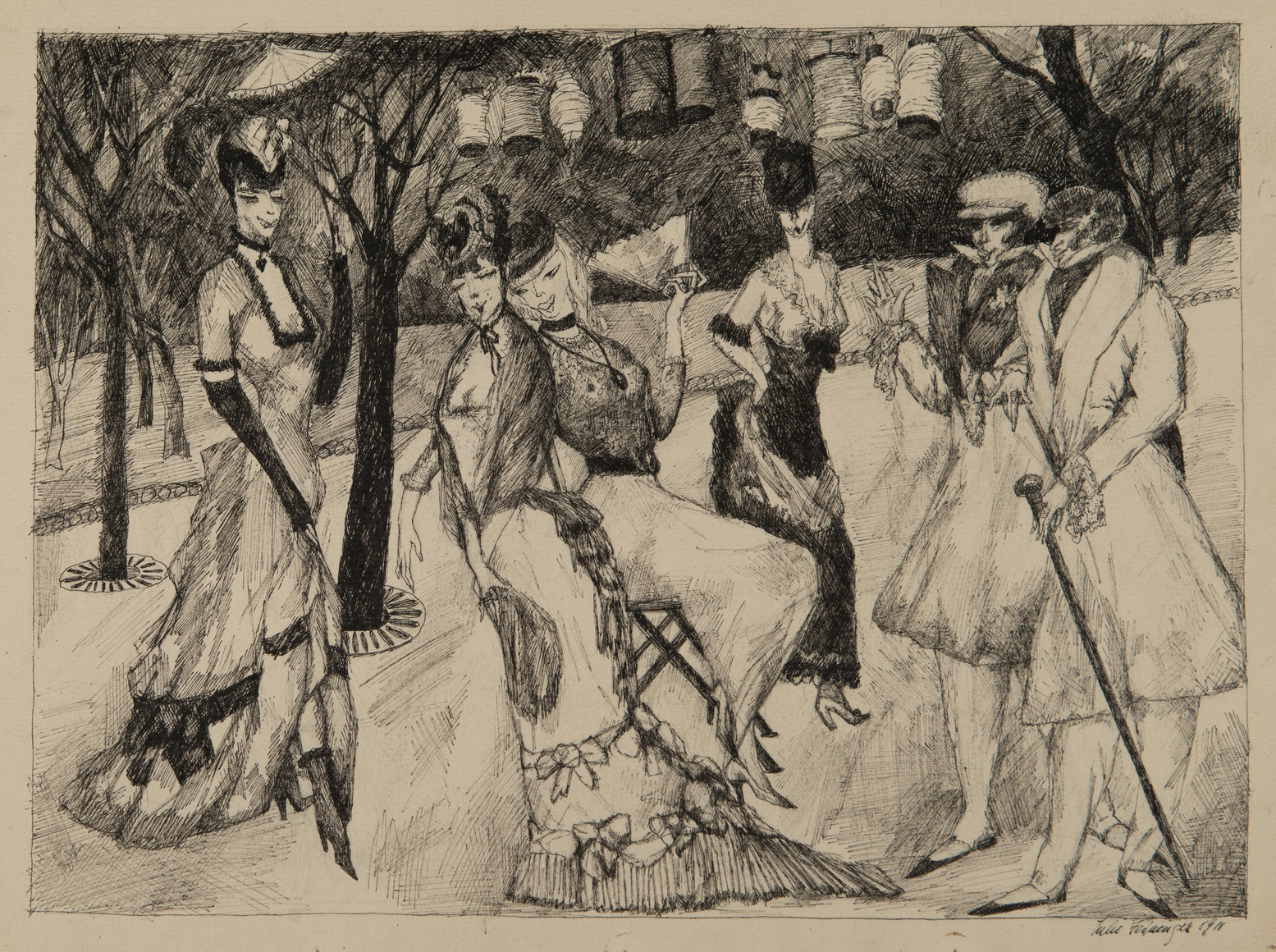
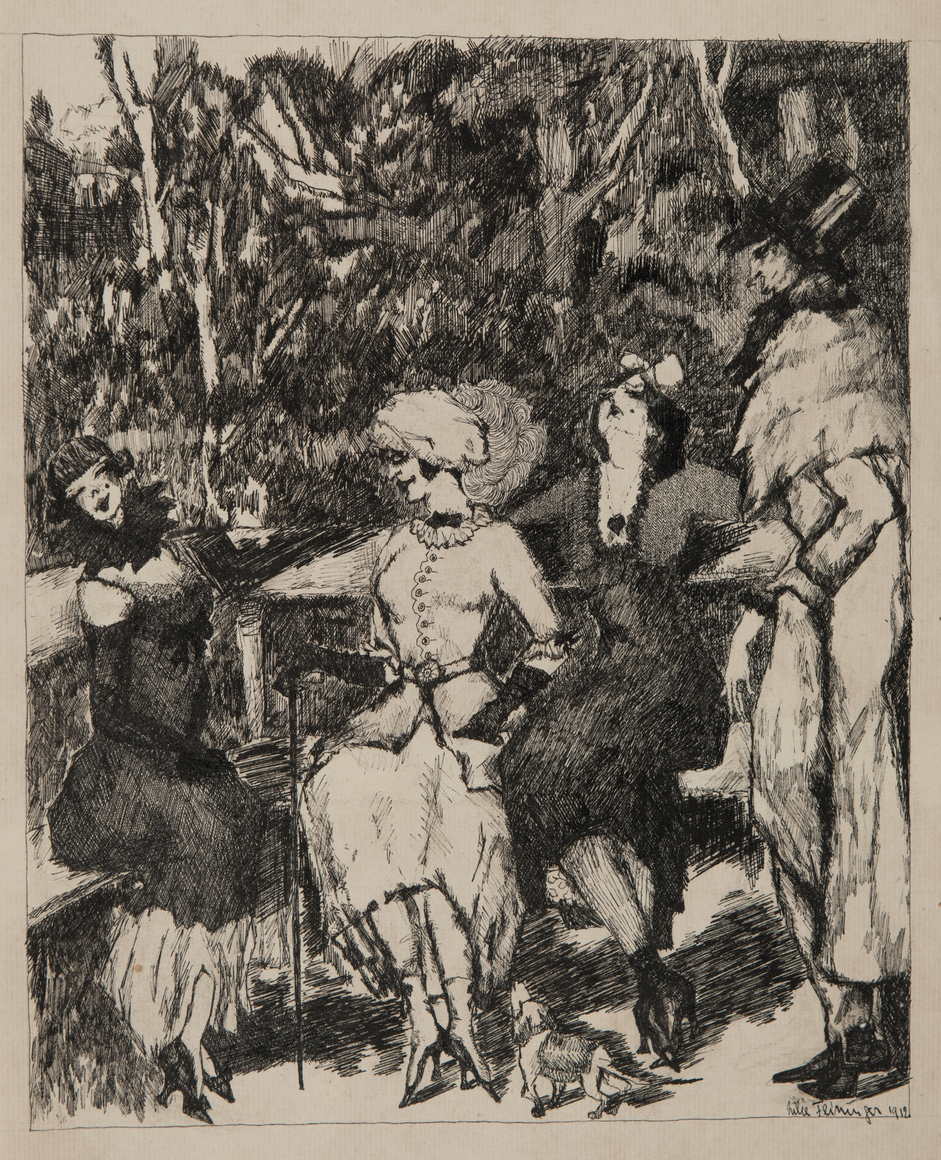
A drawing with the title “Heilgen Damm 1840” (Holy Damn 1840) is published in the magazine Sporthumor (formerly "Das Schnauferl,” VII, IX, no. 19, 1910, p. 8).
1911
From April 21 to June 13 six of her works are shown at the 27ème Exposition de la Société des Artistes Indépendants (27th Exhibition of the Society of Independent Artists) in Paris.
A drawing with the title “Fasching des Lebens” (Carnival of Life) is published in the magazine Sporthumor (X, no. 5, 1911, p. 12). The drawing is signed “Julie Feininger.”
1912
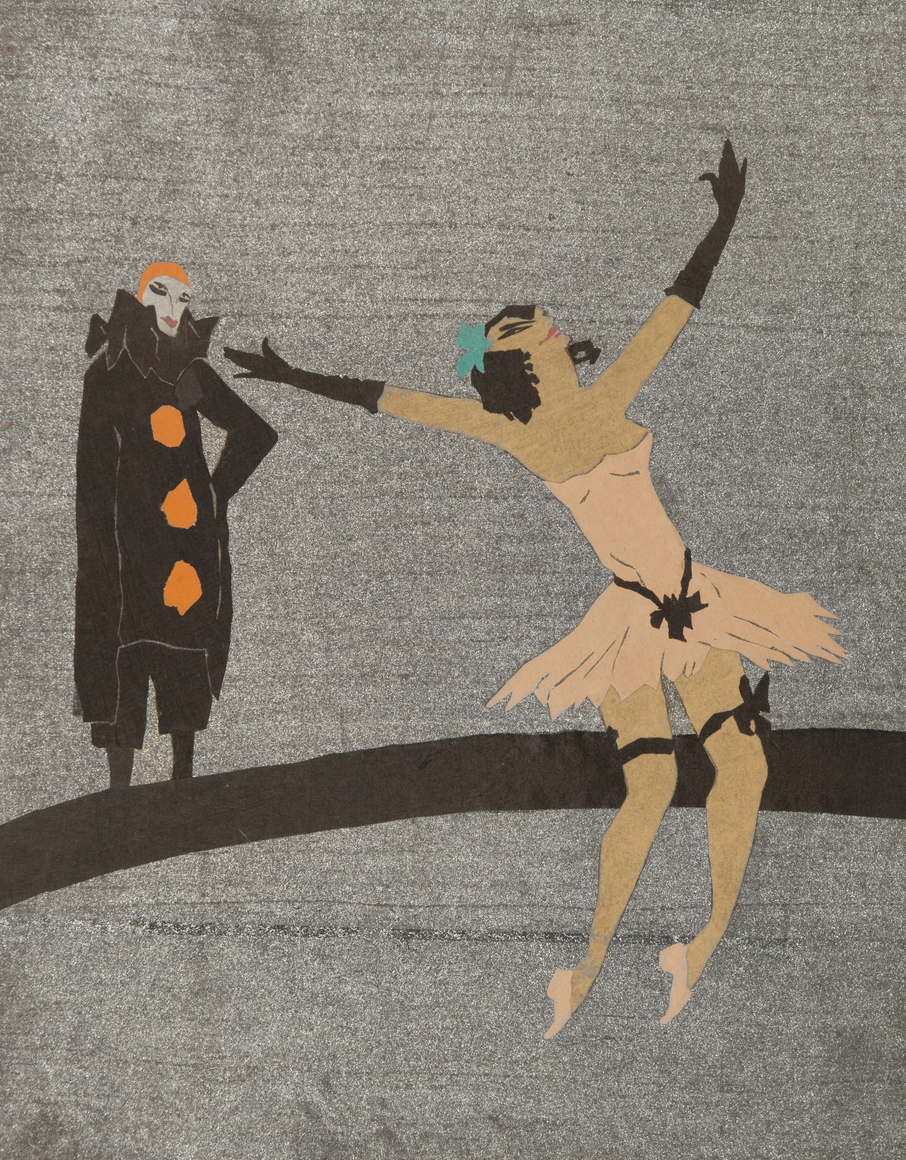
In April ten of her works are shown at the Ausstellung moderner geschnittener Silhouetten (Exhibition of Modern Cut Silhouettes) at the Hohenzollern-Kunstgewerbehaus Friedmann & Weber in Berlin.
1919
Under the aegis of Walter Gropius, the Grand Ducal Saxon School of Applied Arts and the Grand Ducal Saxon School of Visual Arts merge to become the Staatliches Bauhaus in Weimar. On April 12, the faculty appoints Lyonel Feininger as a master.
In July he finds an apartment at Gutenbergstrasse 16 and in August the family moves to Weimar. Julia applies to be accepted for the evening life drawing class as well as the nature class of her husband at the Bauhaus.
1920
She becomes a fulltime student retroactively from October 1, 1919, at the Bauhaus but drops out by October.
1925
On April 27 her father, Bernhard Lilienfeld, dies in Berlin.
1926
On July 30, they move into one of the Bauhaus duplex master houses at Burgkühnauer Allee 2/3. László Moholy-Nagy and his wife, Lucia, occupy the second unit. Andreas falls gravely ill.
1927
She starts creating puppets. She travels to Dresden for a show of her husband and stays with the collector Ida Bienert.
1929
She works intensively on Lyonel’s oeuvre catalogue of paintings while he works in Halle (Saale) on paintings of the city.
1933
The political situation in Dessau continues to escalate. Julia and Lyonel decide to leave Dessau for good.
1934
On September 6, Julia finds an apartment at Lenthersteig 21 in Berlin-Siemensstadt, where they will move in October.
1935
From March to the end of April she stays in Heidelberg to help her son Laurence typewrite his dissertation “Frühgeschichte des Kanons bis Josquin des Prez” (Early History of the Canon up to Josquin des Prez).
1936
Lyonel accepts Alfred Neumeyer’s invitation to teach at Mills College and he and Julia embark from Hamburg on the SS Manhattan on May 6. They arrive in New York on May 14, and are welcomed by Lyonel‘s childhood friends H. Francis Kortheuer and Frederick Strothmann.
T. Lux moves to New York by the beginning of November.
1937
Lyonel accepts an invitation to again teach at Mills College and he and Julia decide to leave Germany permanently.
1938
On January 11, they move into an apartment at 235 East 22nd Street in Manhattan. Lyonel will remain there until his death in 1956 and Julia until her death in 1970.
1945
She and Lyonel write the essay “Recollections of Paul Klee” for the catalogue of the exhibition Paul Klee at The Museum of Modern Art in New York. 1945. They also write “Comments by a Fellow Artist” for the catalogue of the exhibition Paintings by Mark Tobey at the Portland Art Museum and “Wassily Kandinsky” for the Magazine of Art (38, May 1945).
1946
She and Lyonel write the essay ”Perception and Trust” in the magazine Design (47/8, April 1946).
1947
She and Lyonel write the essay “Wassily Kandinsky” in Concerning the Spiritual in Art by Wassily Kandinsky.
1949
For the San Francisco Museum of Art – Magazine of Art she writes the essay about “Feininger and Klee.”
1956
On January 13, Lyonel Feininger dies at the age of eighty-four in his New York apartment. Feininger is buried at Mount Hope Cemetery (section 99, lot 125, no. 2) in Hastings-on-Hudson, New York.
1959
She compiles the oeuvre catalogue rof Lyonel Feininger’s paintings which is published in the monograph Lyonel Feininger by Hans Hess.
1970
Julia Feininger dies on August 7 in Syosset New York and is buried with her husband at Mount Hope Cemetery (section 99, lot 125, no. 2) in Hastings-on-Hudson, New York.